

The Problem
The NFT market collapsed. Many users were left holding illiquid assets with no buyers, no exits, and no meaningful options.
At the same time, SBX needed high-intent users — not bonus hunters chasing free credits.
Traditional promotions don’t work in that environment. They attract the wrong behavior and undermine trust.
Recyclatron was the response.
A one-time NFT redemption engine that let users burn a single eligible NFT and receive up to 10× the floor price in casino bonus credits.
Not a buyback. Not a bailout.
A way to turn sunk cost into action.
Art Direction
How It Worked
The system was deliberately simple — and deliberately constrained.
- User connects their wallet
- Selects one NFT from a curated eligible list
- SBX verifies the current floor price
- NFT is transferred to SBX
- User receives bonus credits equal to up to 10× floor price
Every rule existed to protect trust, optics, and long-term value.
Safeguards by Design
- One NFT per user — commitment over abuse
- Bonus credits only — no cash equivalency
- Curated collections — prevents manipulation
- Auth after value reveal — filters low-intent users
- Lower rollover than standard promos — meaningful incentive
Positioning & Voice
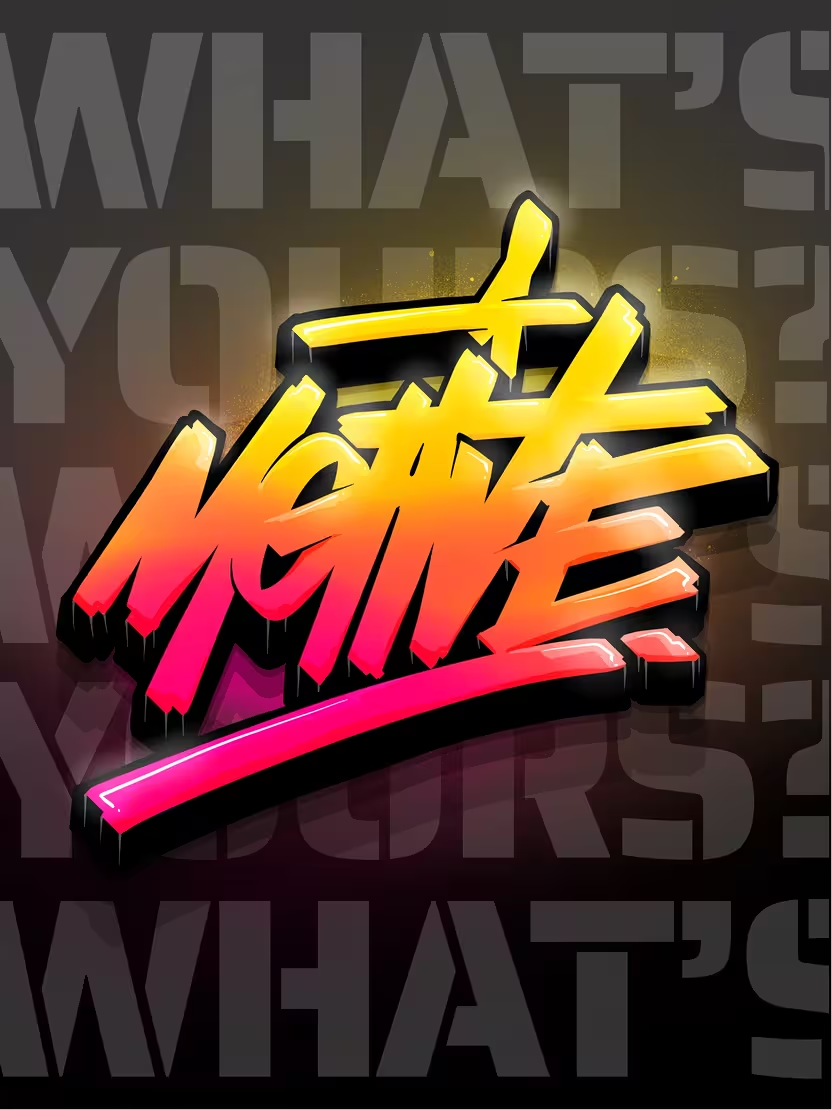
Recyclatron wasn’t marketed like a promotion. It was designed as a cultural moment.
The language was meme-native, direct, and honest — never apologetic, never hype-driven.
- Regret Has Value
- Burn the Bag
- Dead Mint Society
- From JPEG to Jackpot
- Degenerate Utility
Brand and mechanics were inseparable.
Intended Outcome
The campaign was designed to achieve three things at once:
- Acquire high-intent SBX accounts
- Convert NFT holders into active players
- Position SBX as a Web3-native casino built on utility
Target metrics included:
- 4,250+ new signups
- 10,000+ NFTs recycled
- 35%+ post-bonus depositor conversion
- Strong organic social participation
What Made It Good
This wasn’t a discount dressed up as innovation.
- Solves a real emotional problem, not just a funnel gap
- Strong constraints that protect the system
- Brand and product designed as one system
- Meme-native without sacrificing discipline
- High leverage with no fake promises
It didn’t pretend NFTs still had value.
It gave users something useful to do with the loss.
The Reality
Recyclatron required significant cross-functional effort across product, engineering, risk, and brand.
The system was fully designed, scoped, and ready to launch — but the business ultimately ceased operations before it could go live.
Not everything that’s well designed gets to ship.
The value here is judgment: knowing how to build ambitious systems inside real-world constraints — even when the outcome is uncertain.